After leaving Fort Bowie we stopped in to get oriented at the Chiricahua National Monument. We didn’t have enough time left in the day to see much, so we picked a map and came up with a plan for the following day. We talked for a while with Vince, who was bikepacking the back roads from Tucson to Las Cruces and had stopped in to top off his water before heading over the mountains. We met a few interesting people on this tour of the southwest, Vince was one of them.
After a night out on the Coronado National Forest we headed back to the Monument the next morning. We saw the signs the day before – “Coati Crossing”.
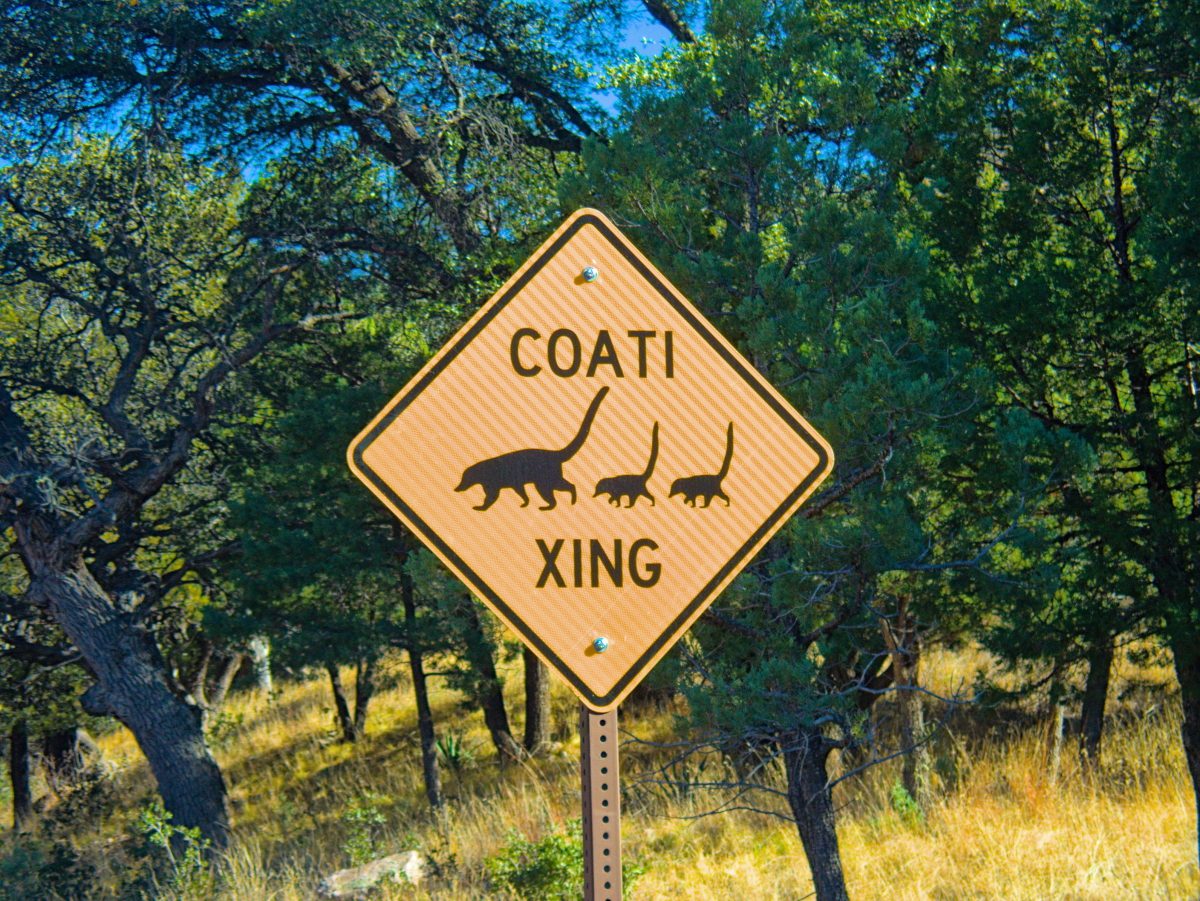
What the heck is a coati? Well, it is a member of the racoon family, and about the same size, but with a snout shaped noze and long pointy ringed tail. What would be the odds of seeing a Coati? Well, the monument must have them trained, because right when we approached the sign, here came one crossing the road! It quickly scampered up into a tree.
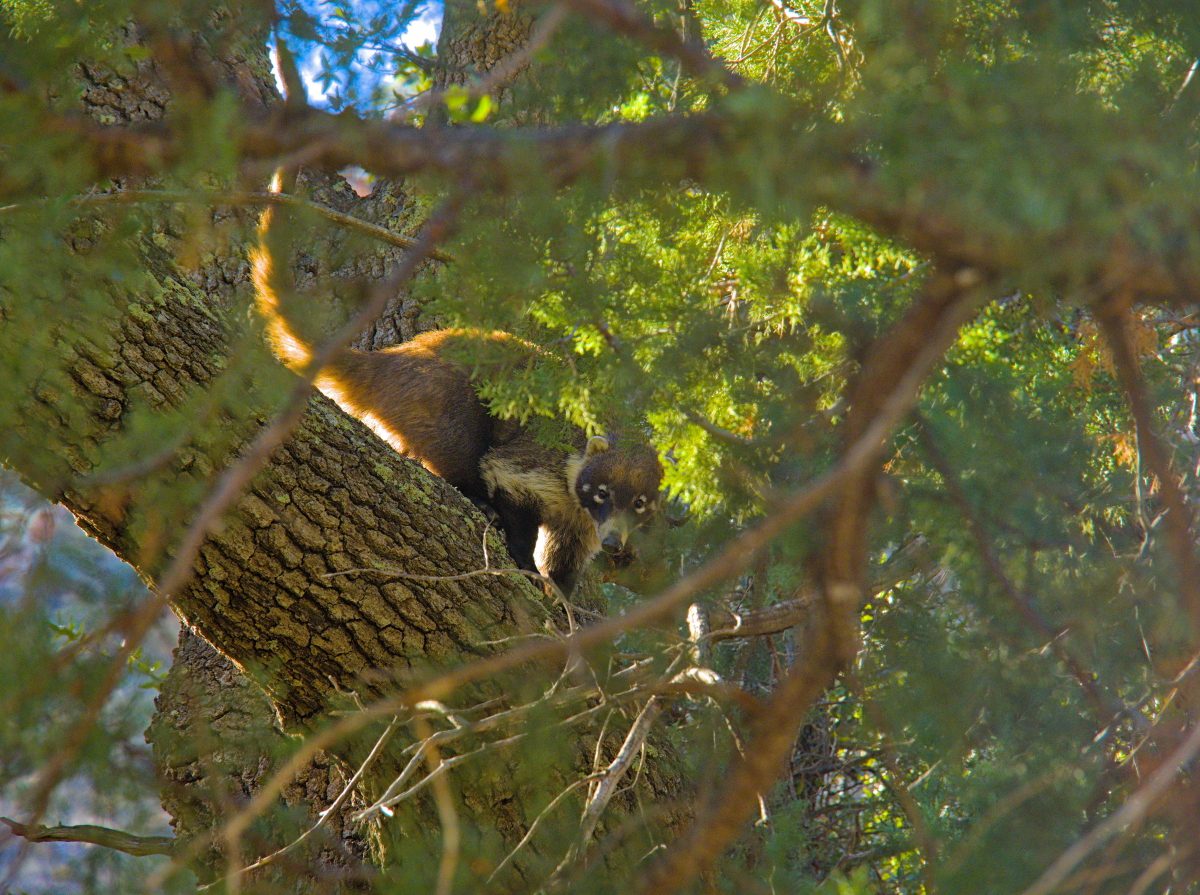
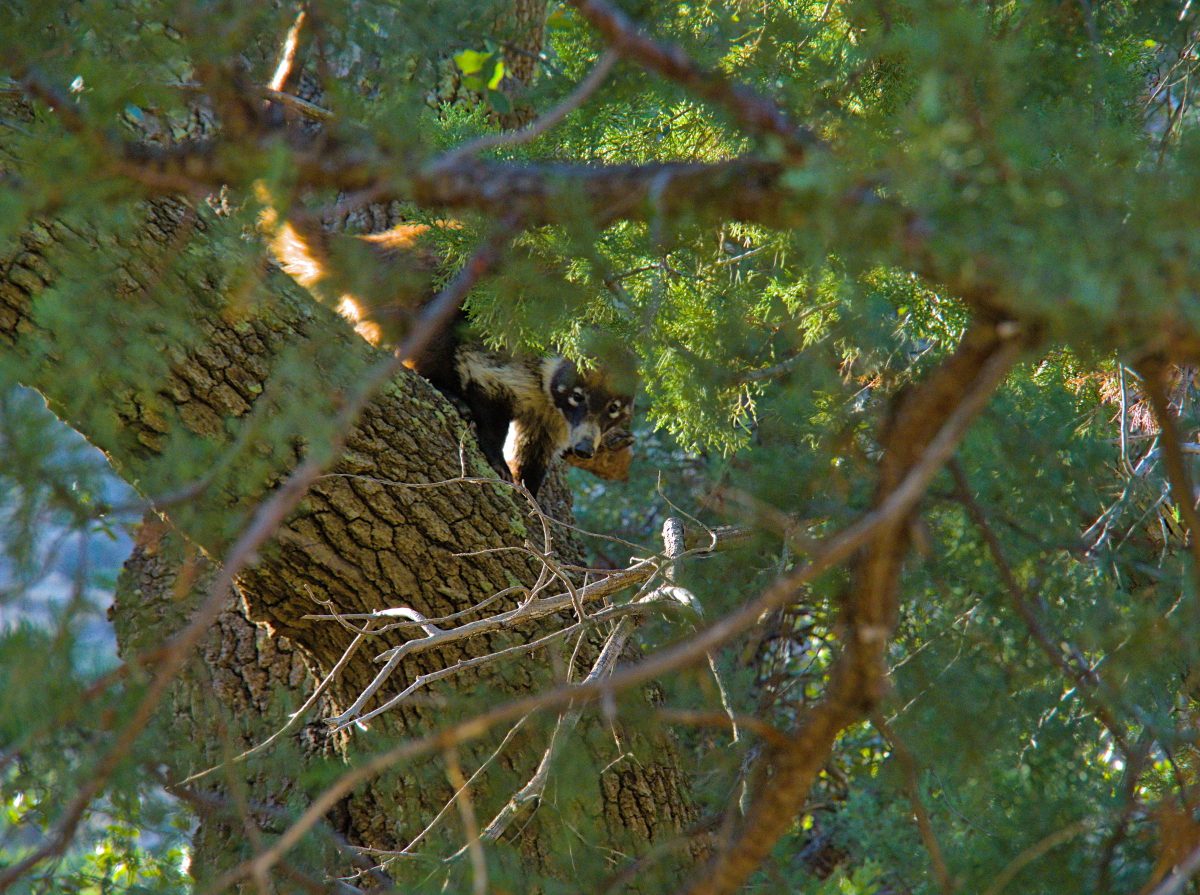
How lucky were we? This was a first for us. It quickly came back down out of the tree and moved on as we headed up the road.
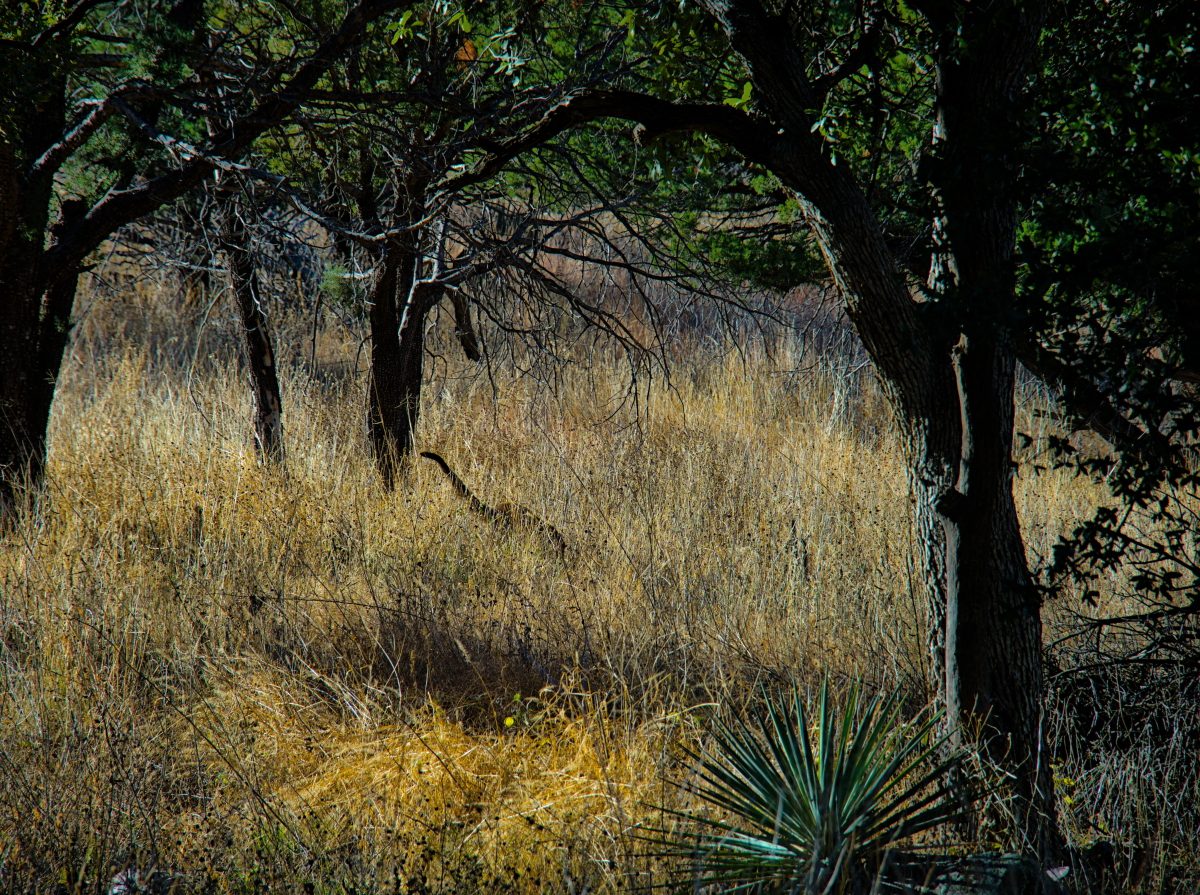
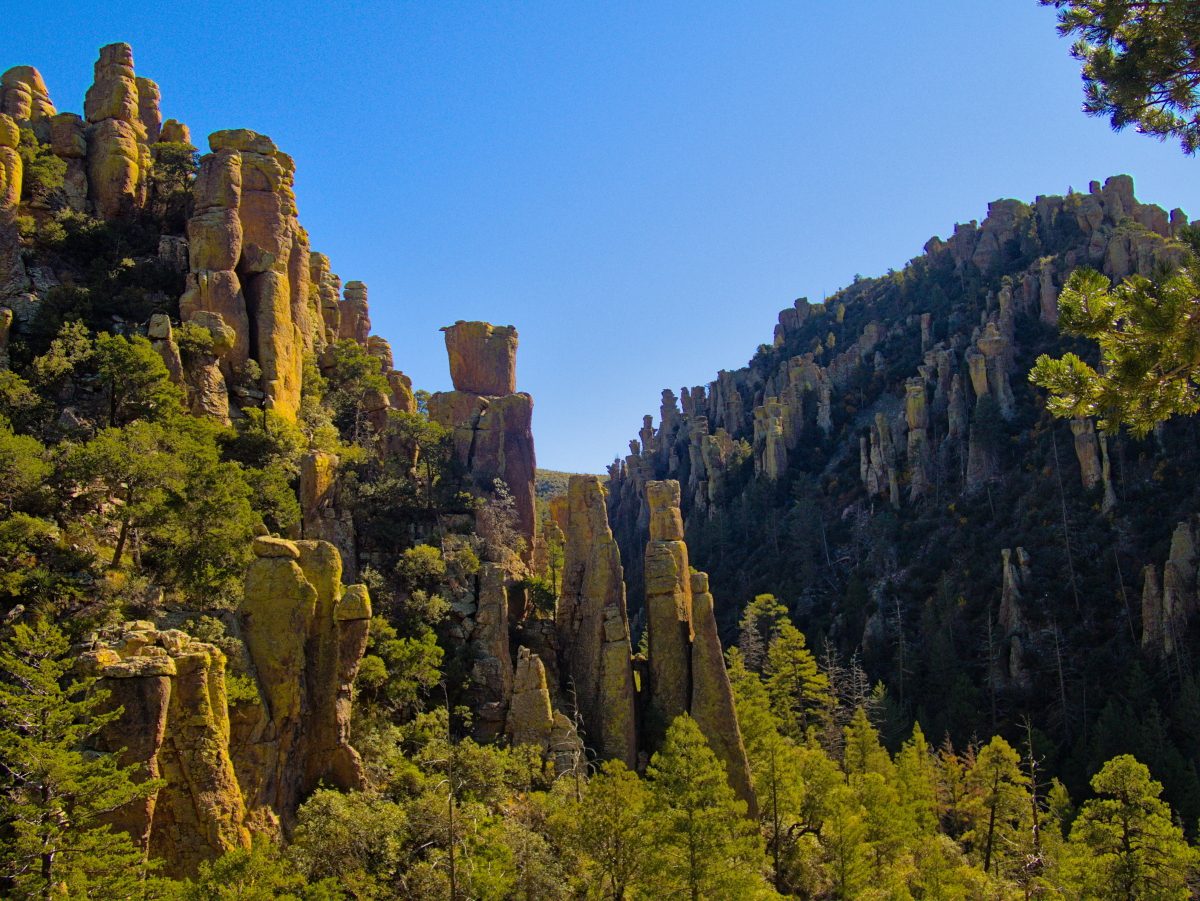
We drove to the end of the Bonita Canyon Road and headed out on our planned hike for the day, the Echo Canyon Loop.
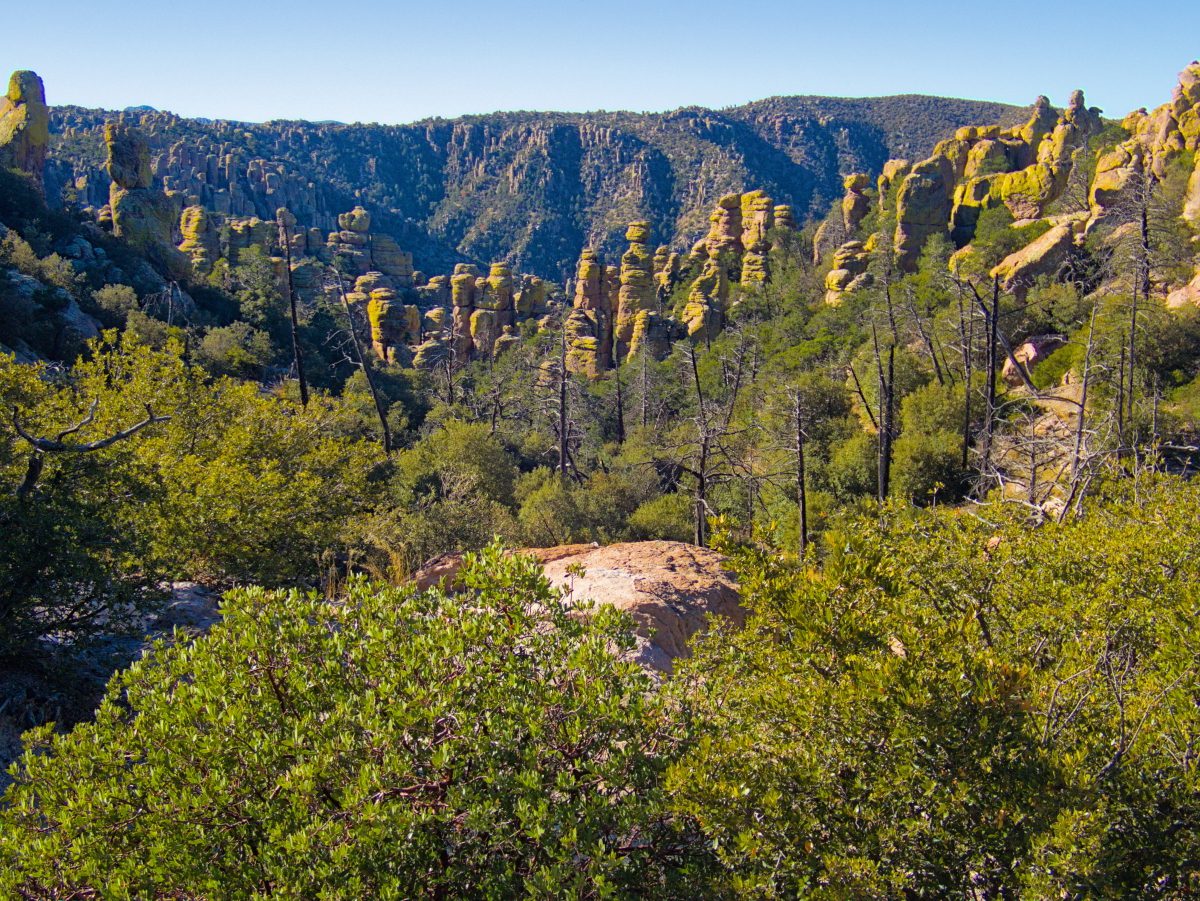
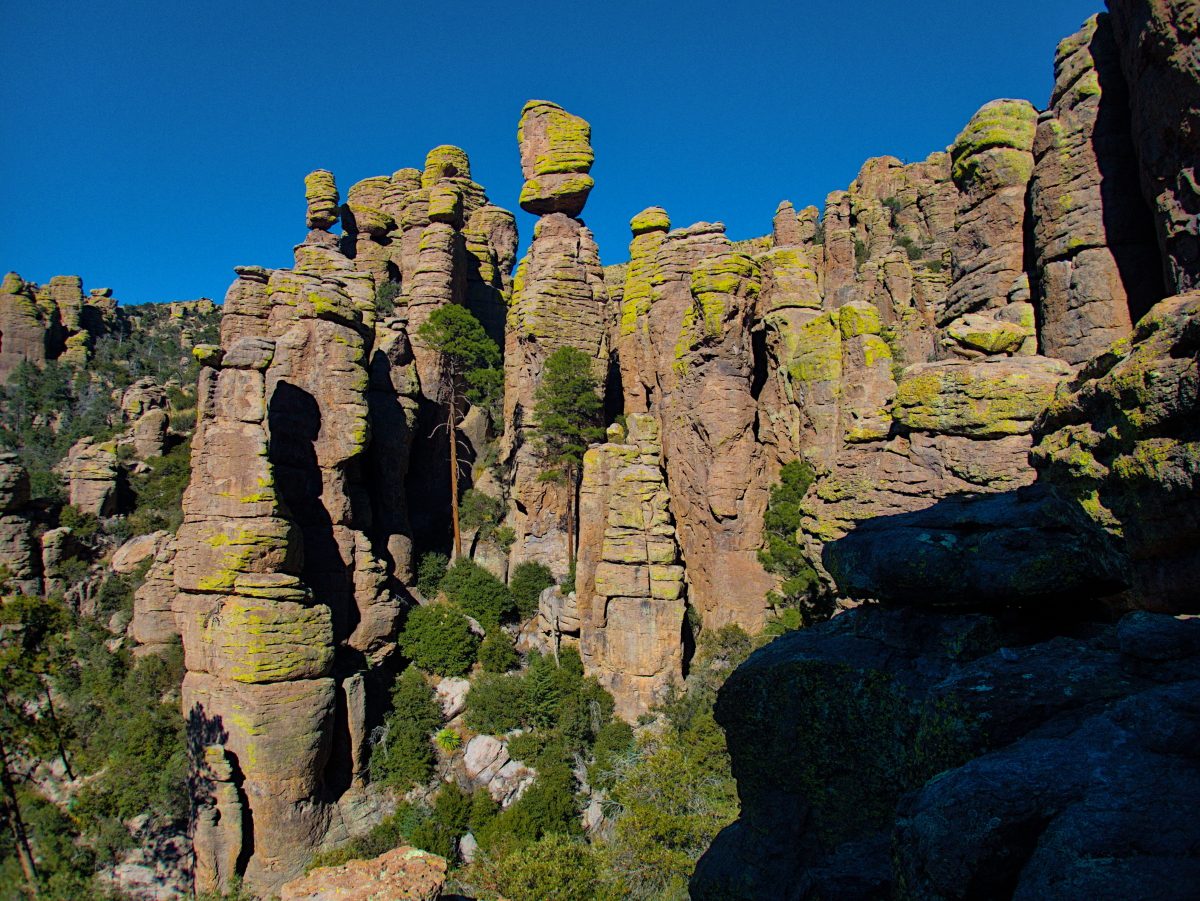
The hoodoos that are so prominent in the monument are rhyolite, which is a welded ash or tuff that erupted from a volcanic event that dates back about 27 million years ago. The area that is now protected by the monument was covered in this ash flow, and as the flow cooled it formed cracks that have weathered into the formations we see today.
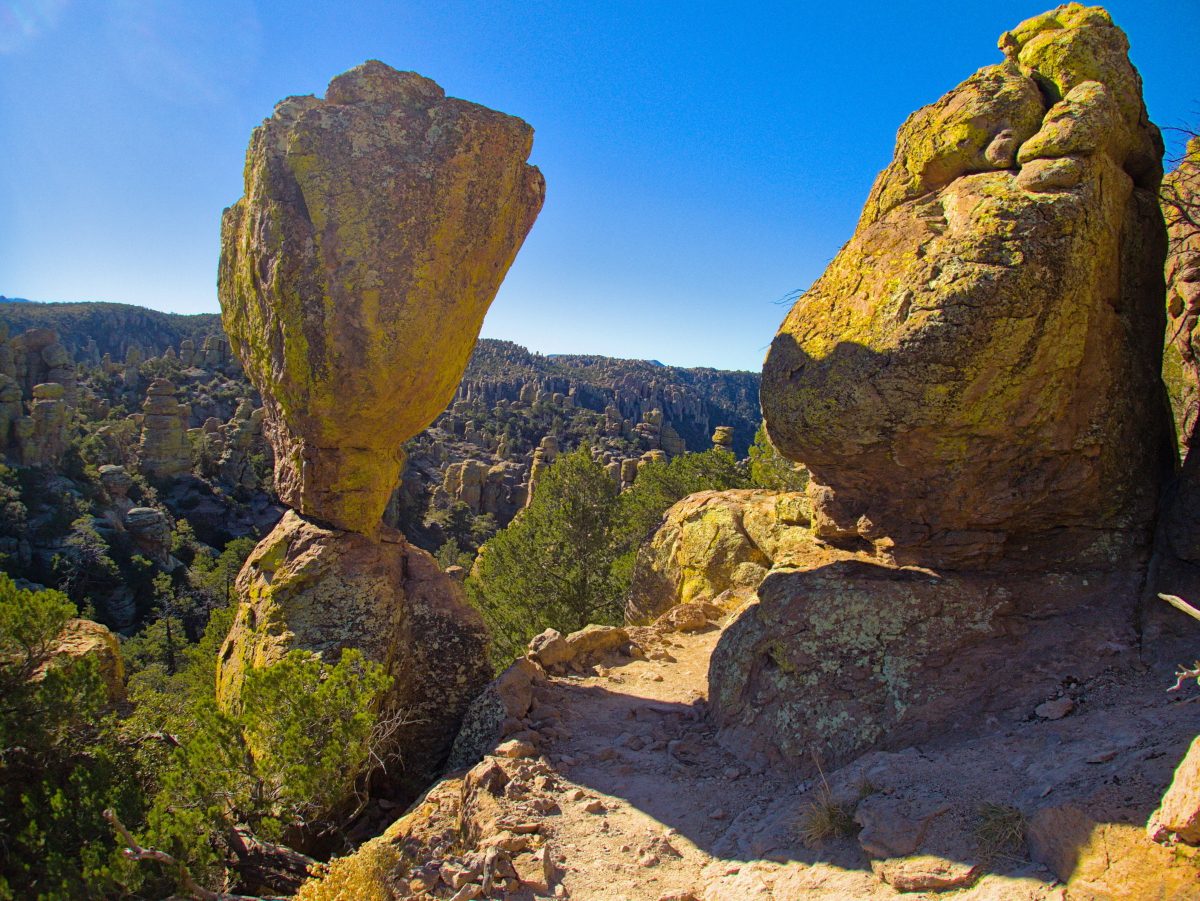
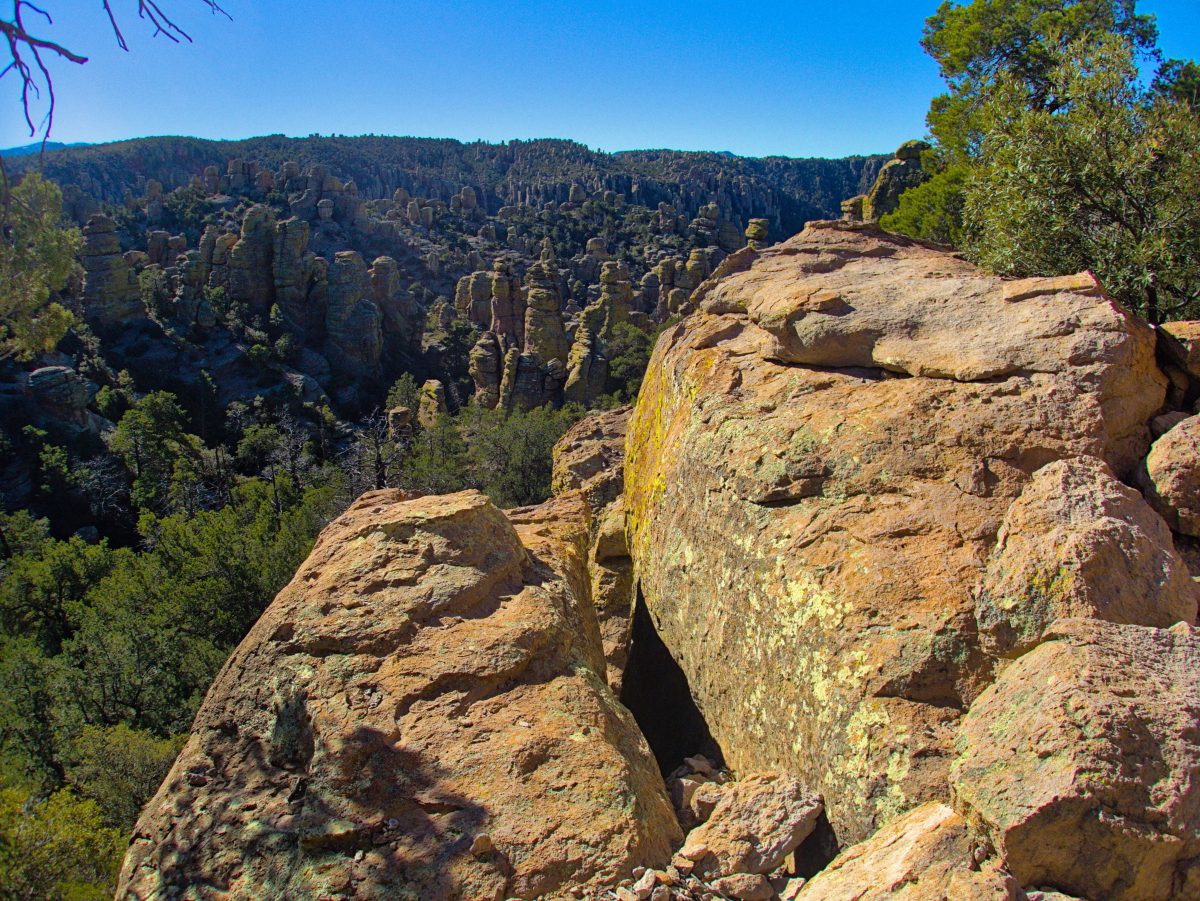
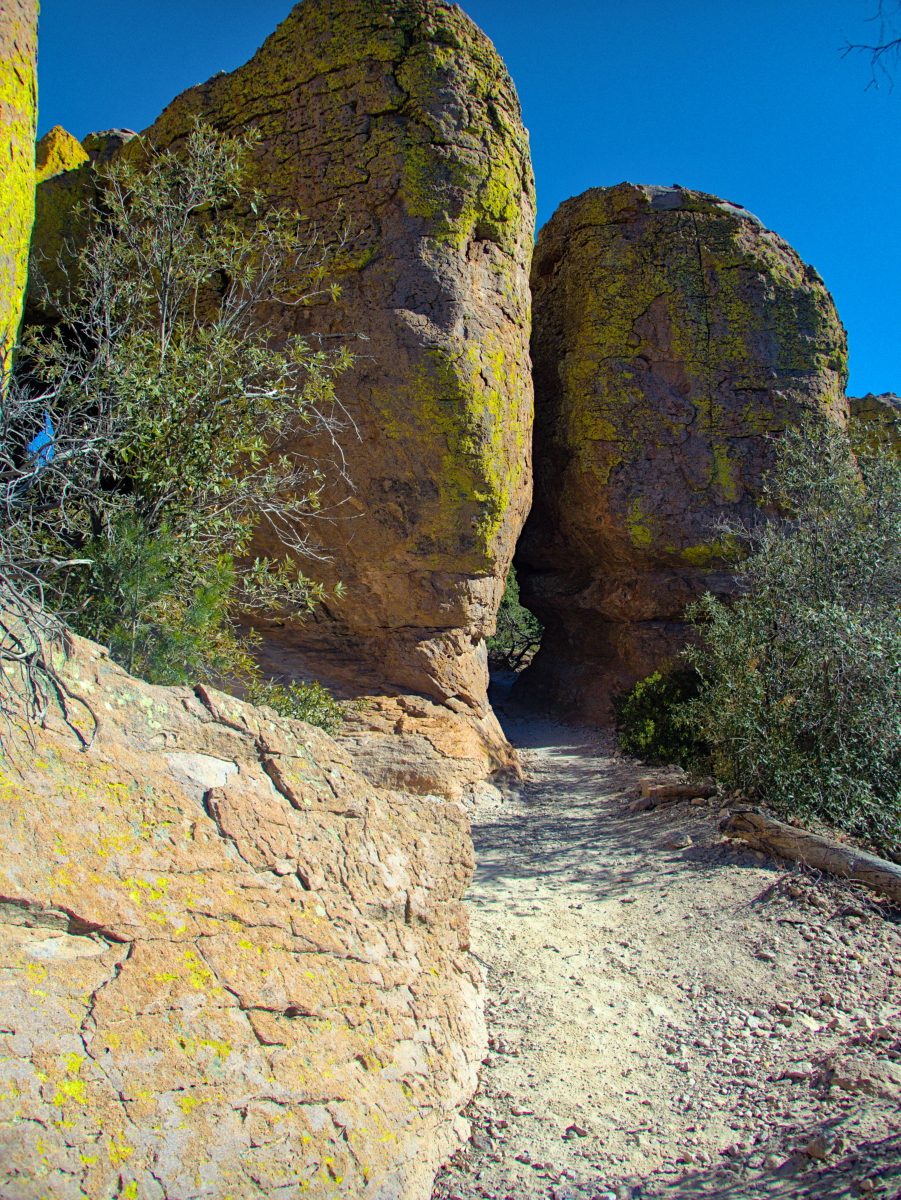
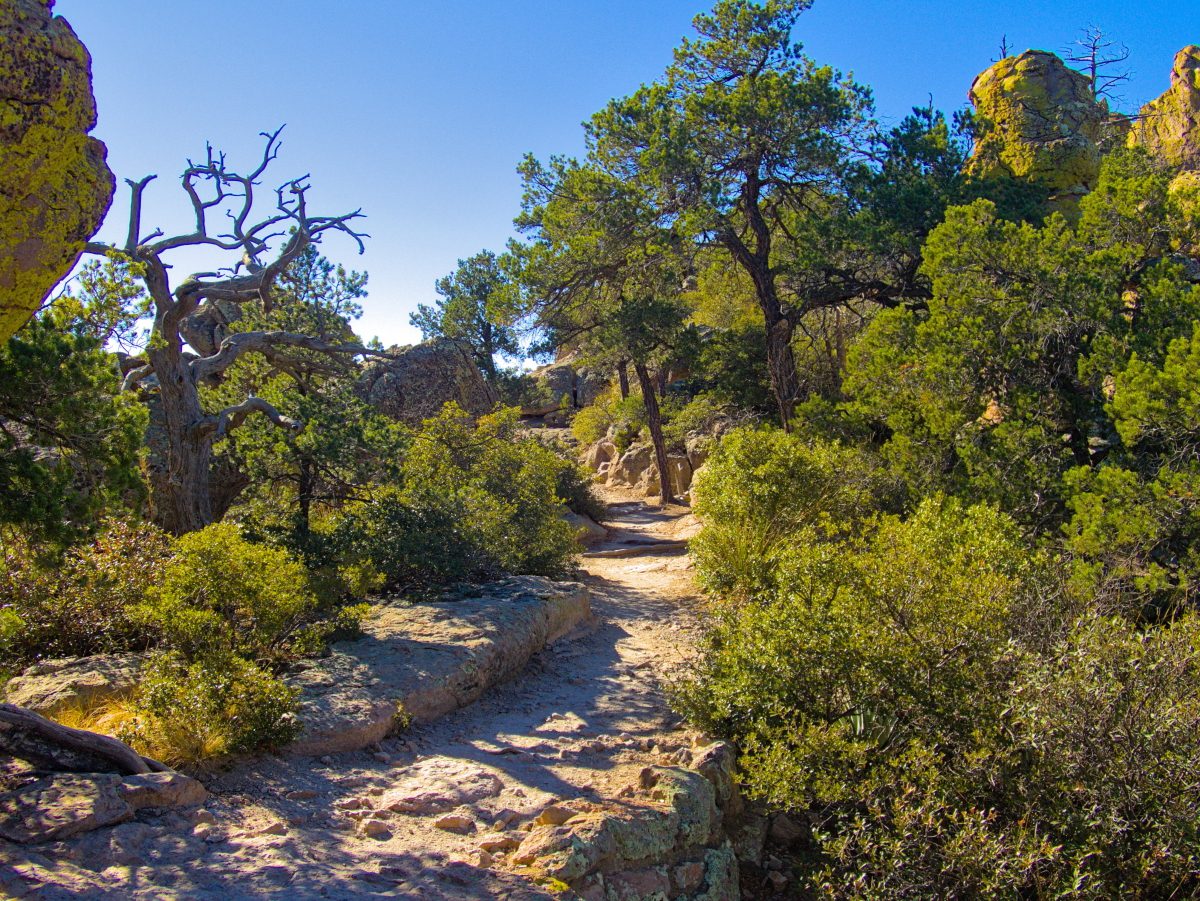
The trail, which was built by the CCC’s in the 1930’s has been built to feature the hoodoos and winds through them on the way down into Echo Canyon.
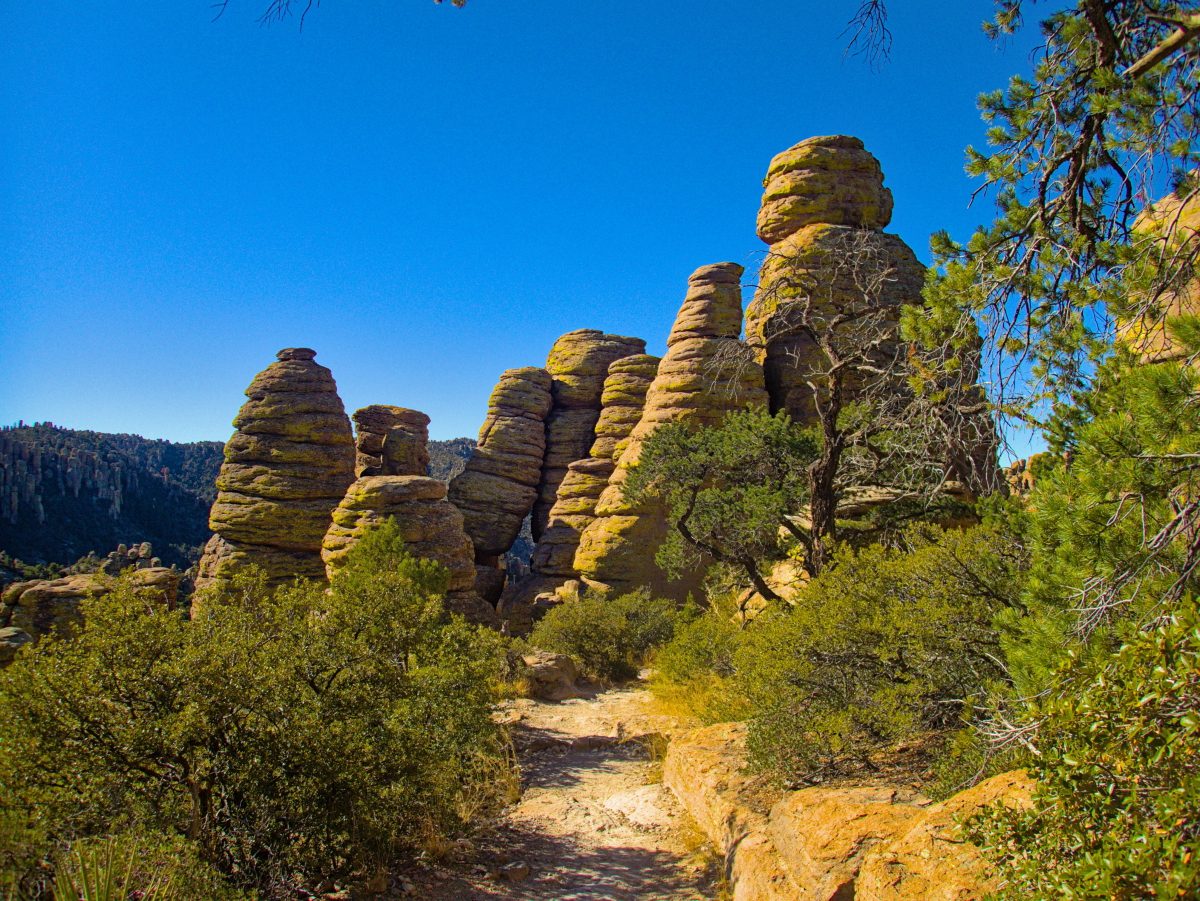
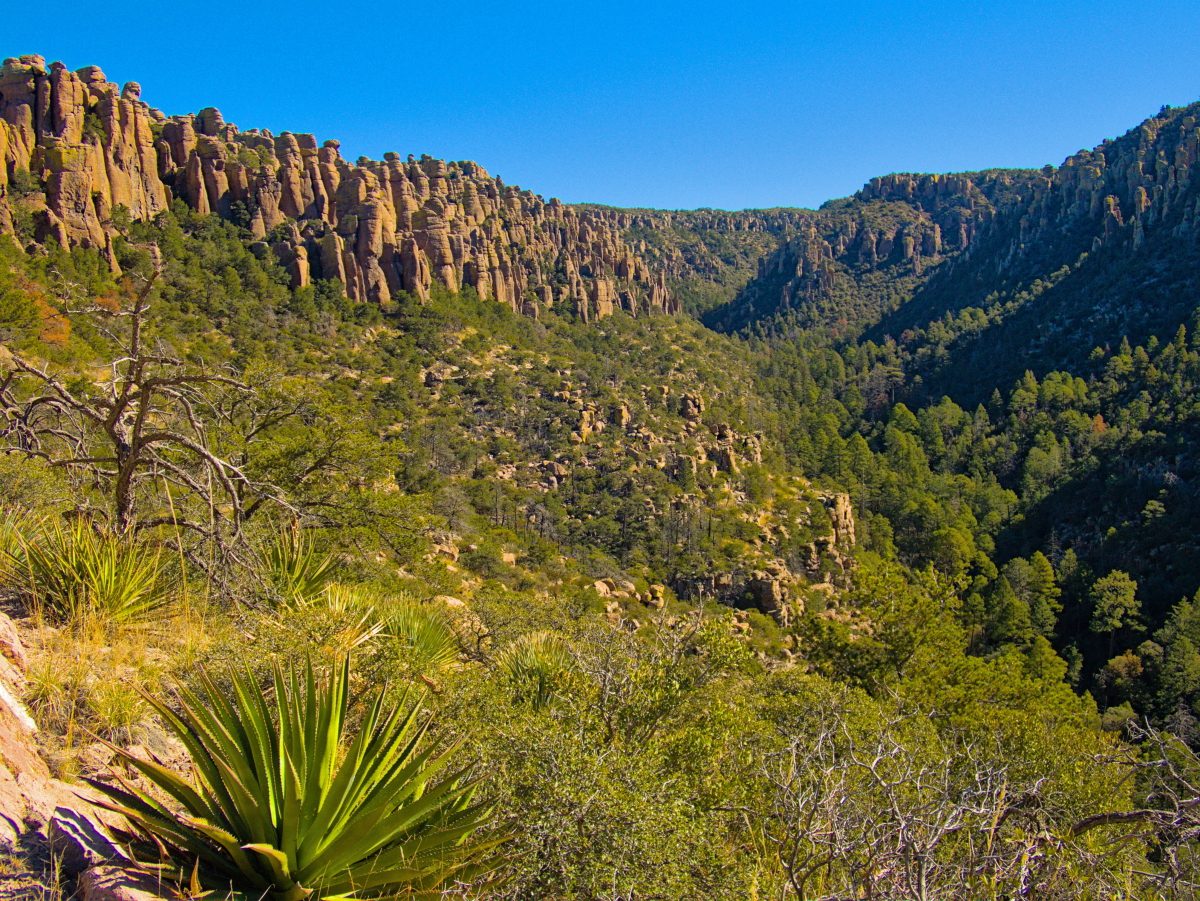
The trees in the monument are pretty amazing. I was very surprised to see large sycamores near Bonita Creek, and other trees include the Arizona cypress, alligator juniper, Apache pine, Arizona live oak, pinyon and ponderosa pines and even Douglas-fir dot the landscape. This diversity is the result of the Chiricahua mountains being a sky island, which is an isolated mountain range that rises up out of the desert that surrounds it. These sky islands have tremendous biodiversity due to their varying elevation, climate and geology.
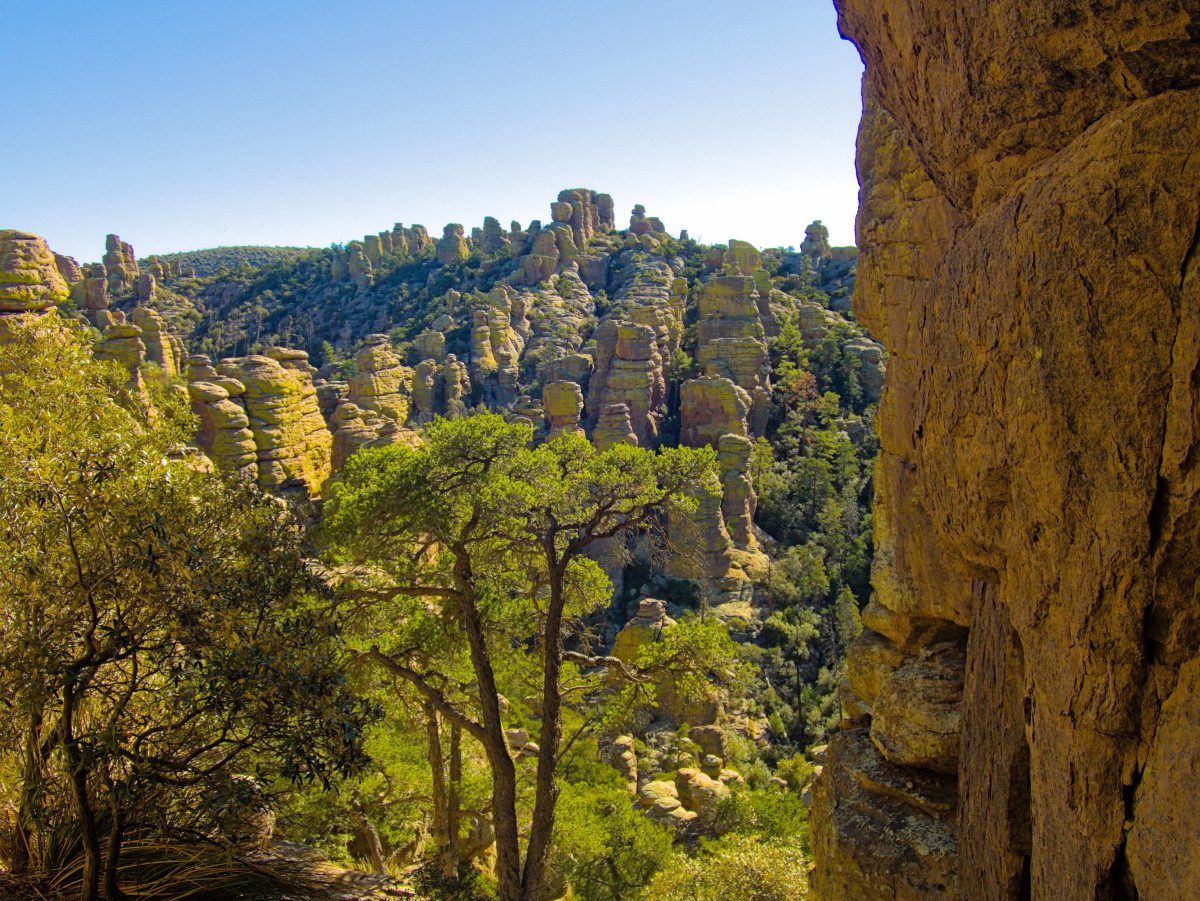
We finished up the Echo Canyon Loop and enjoyed a lunch at Massai Point before heading out to find another spot to camp for the night on the Coronado National Forest. We headed over the pass toward Cave Creek and Portal, and just as we climbed over the pass, who did we meet? Yes, it was Vince, he had just finished his 2000 foot climb to the top of the pass, which took him most of the day, and was coasting down on his way to a shower and motel at Portal. We gave him a protein bar in case he needed the extra energy to finish his day, continued on and found camp under a big sycamore for the night.
Pingback: Sandhill Cranes of Whitewater Draw – Occidentalist