After our day at Guadalupe Mountains National Park we started moving in a westward direction for the remainder of our southwest tour, until it was time to turn north for home. As we started back west, the next stop on the list was White Sands National Park. White Sands only became a national park in 2019 but was designated as a national monument way back in 1933. The main feature of the park are the white sand dunes, the largest gypsum dune field in the world.
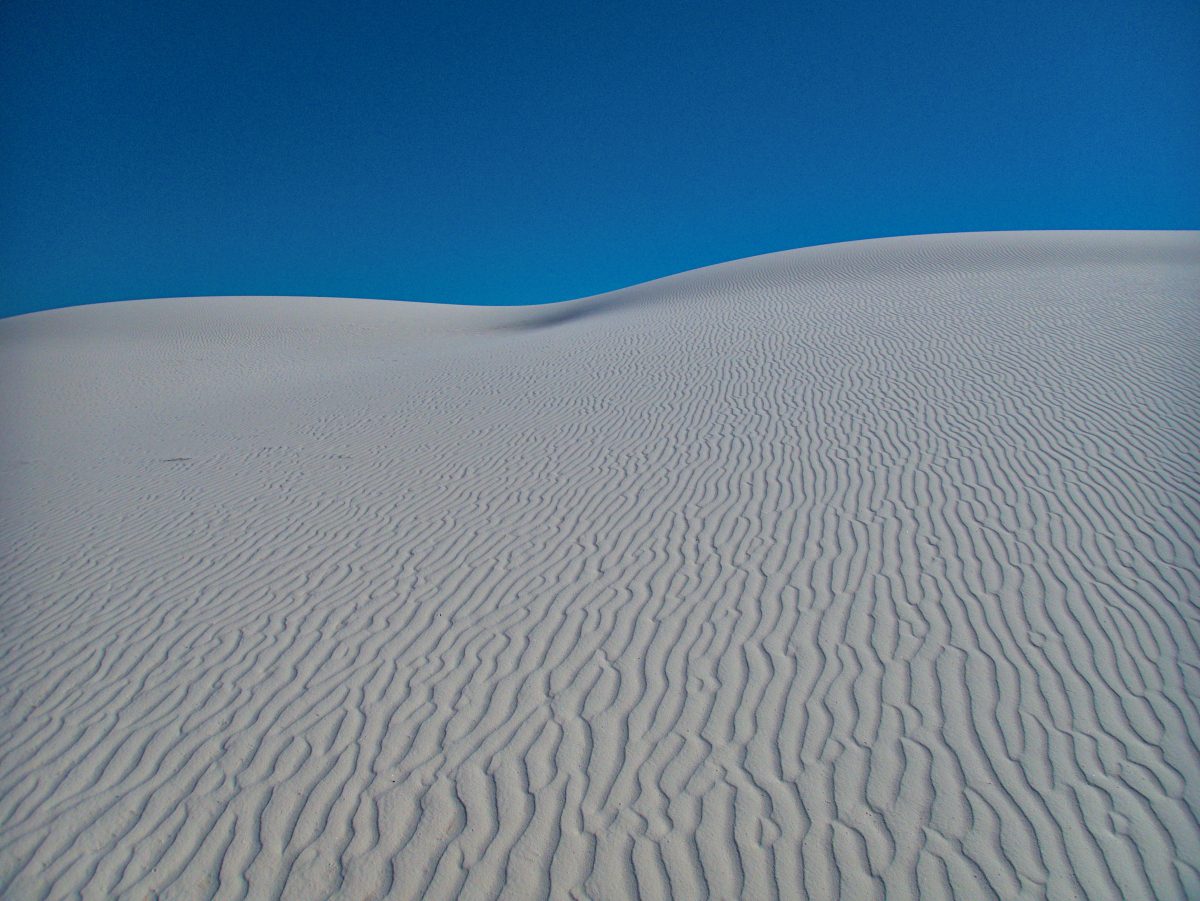
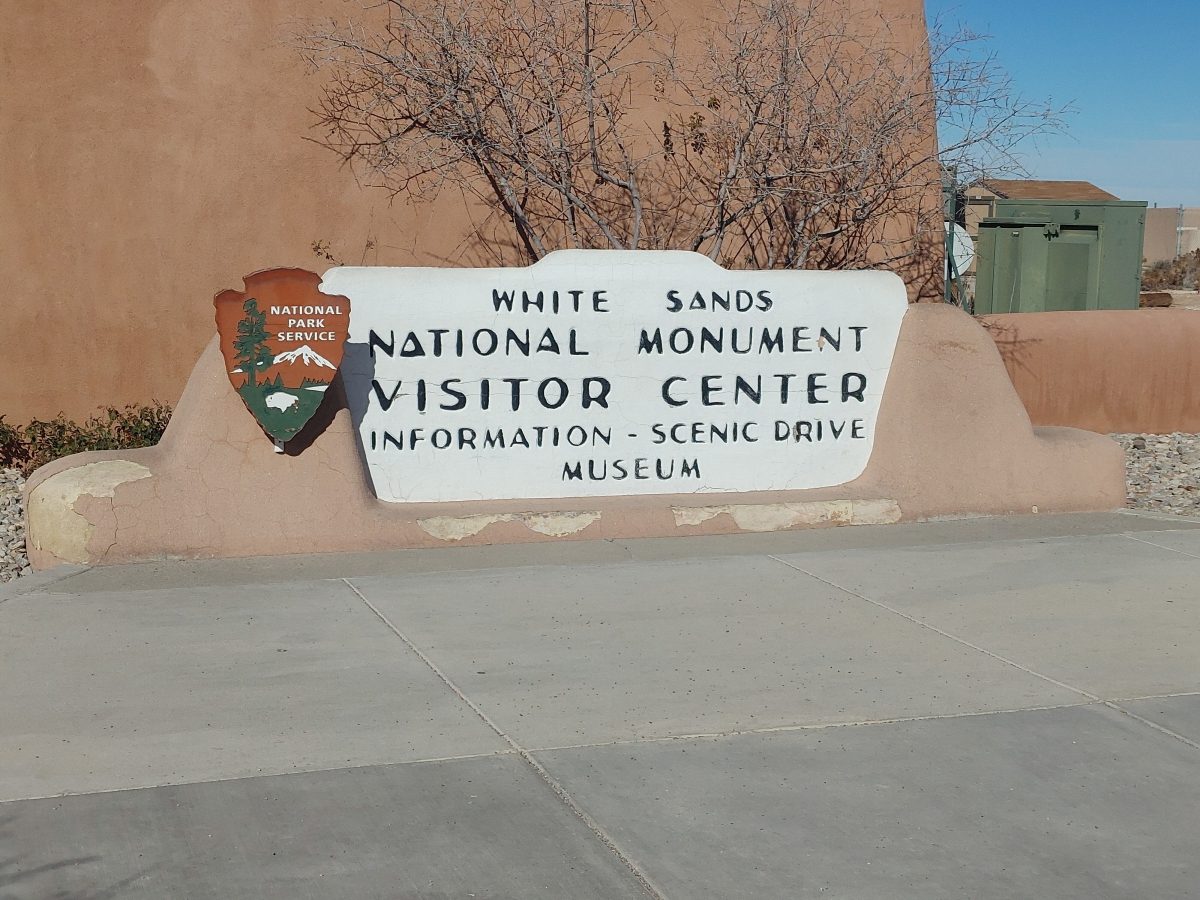
These aren’t just any old sand dune. Made up of gypsum that originated from a large Permian sea that has since broken down over millions of years into sand particles, this sand feels firm underfoot, and is nearly blindingly white.
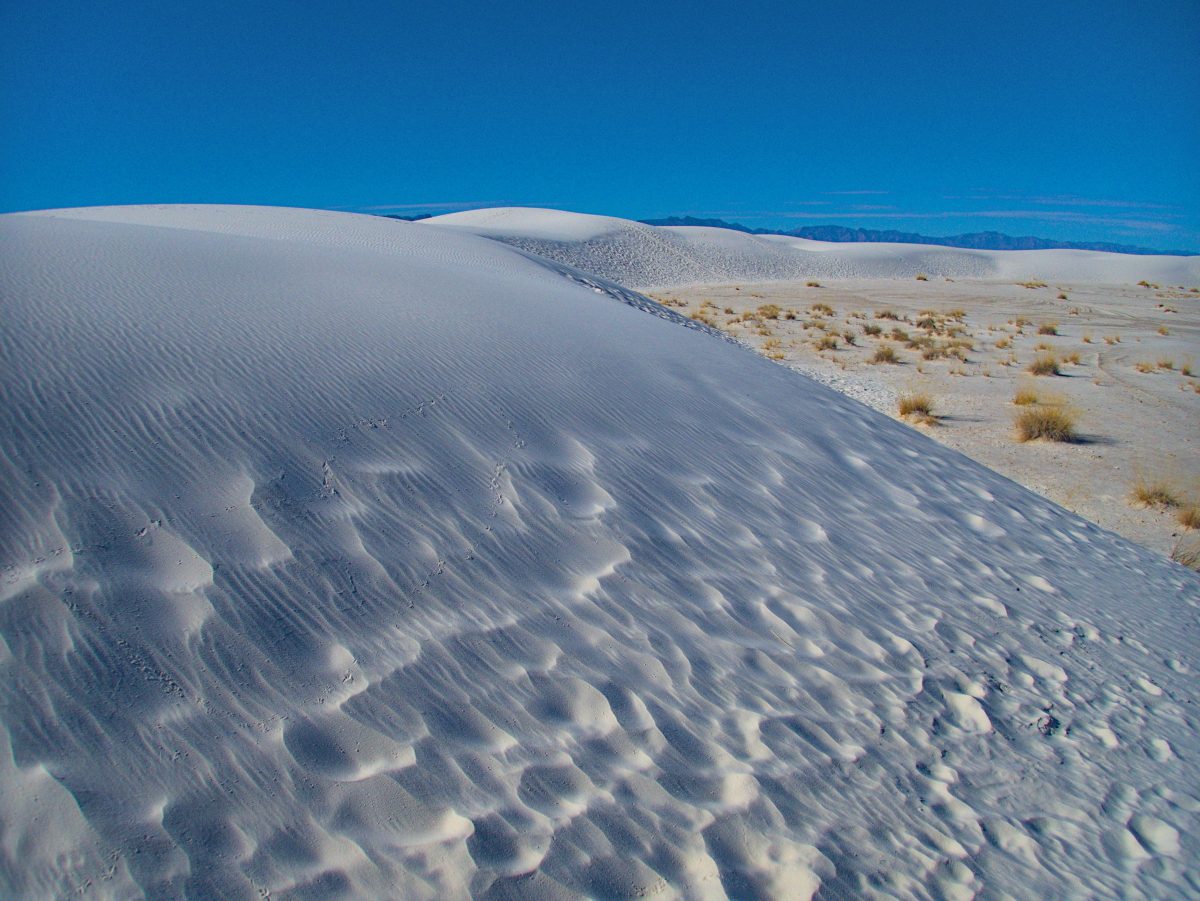
After you wander out away from the parking areas you start to leave the other footprints behind. It’s a surreal, disorienting feeling to be surrounded by so much sand, so much white, contrasting only with the bright blue New Mexico sky.
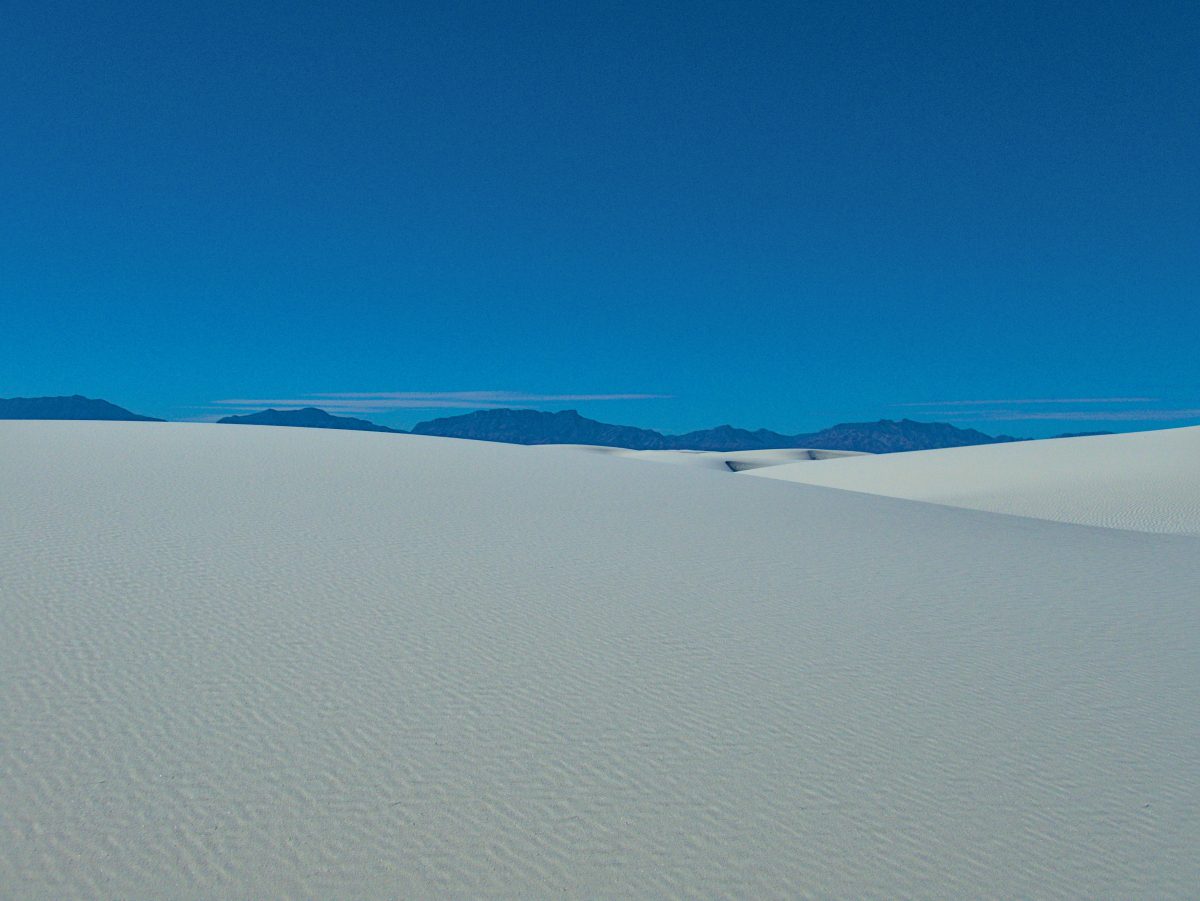
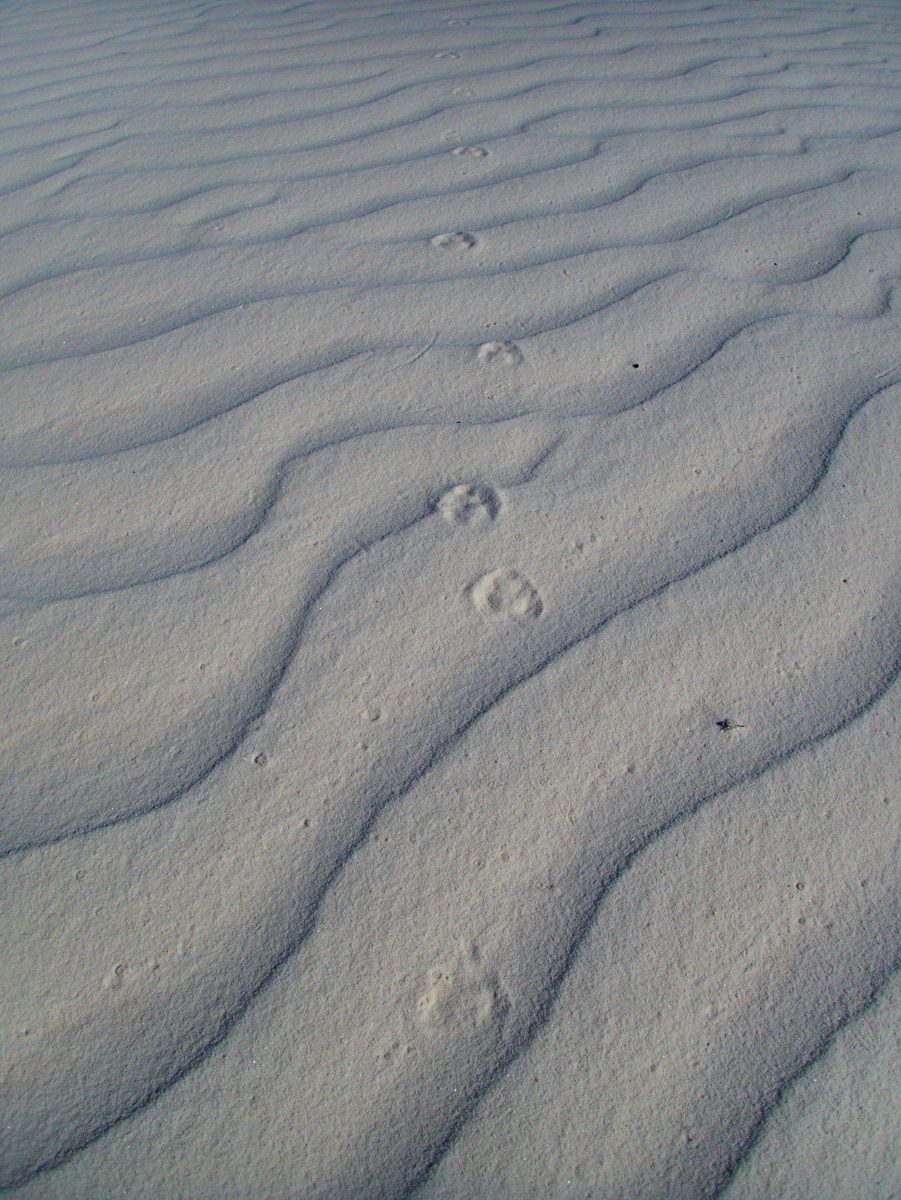
Of course you don’t leave all the tracks behind. I get the impression that the dunes come alive at night with the natives.
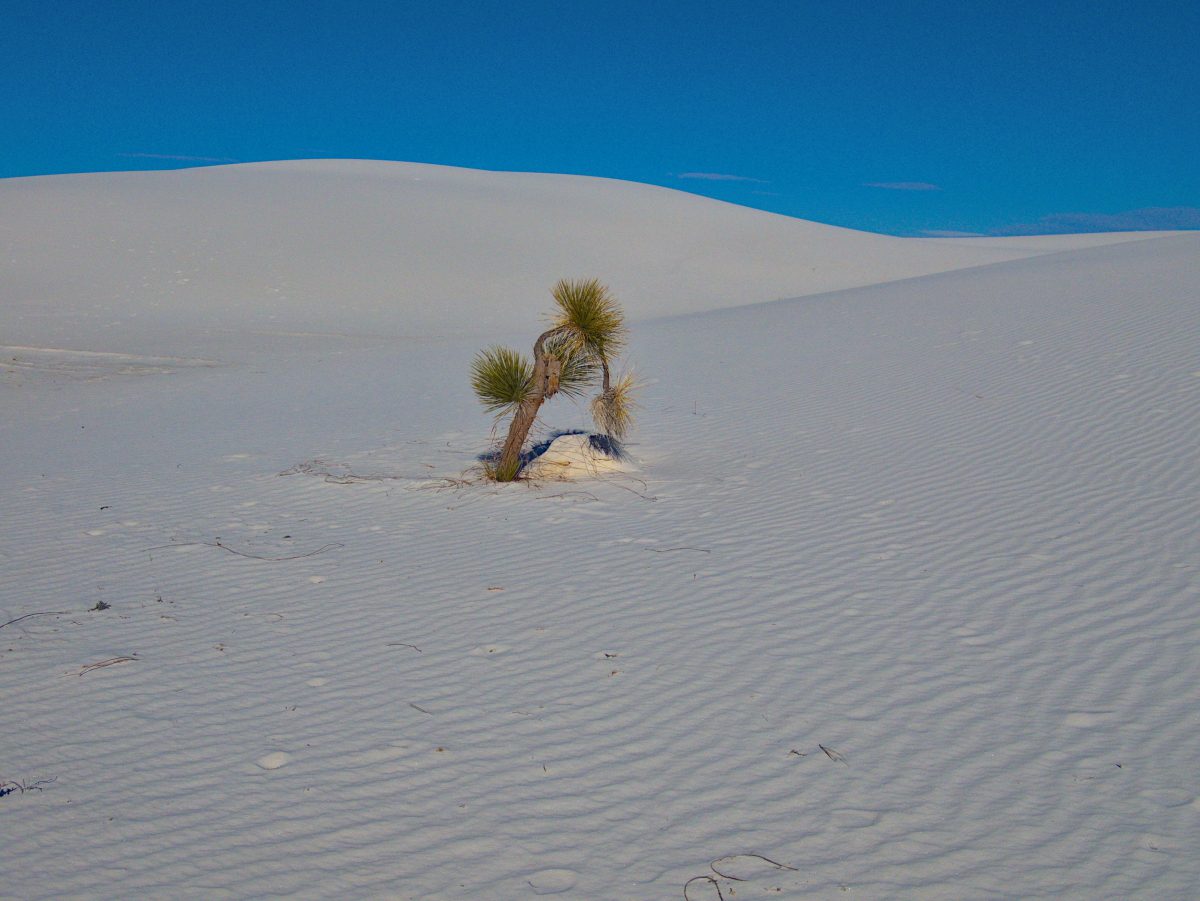
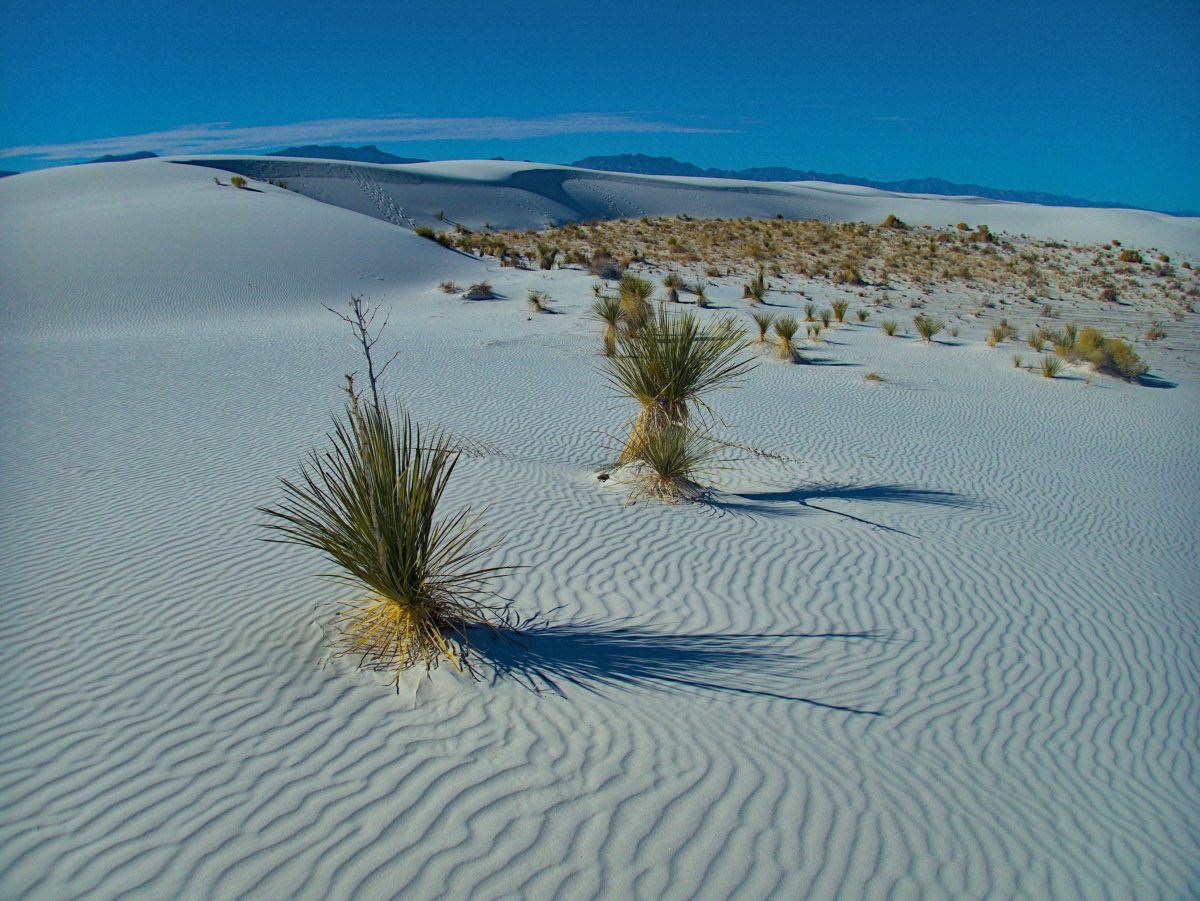
A few plants seem to eek out a living here as well.
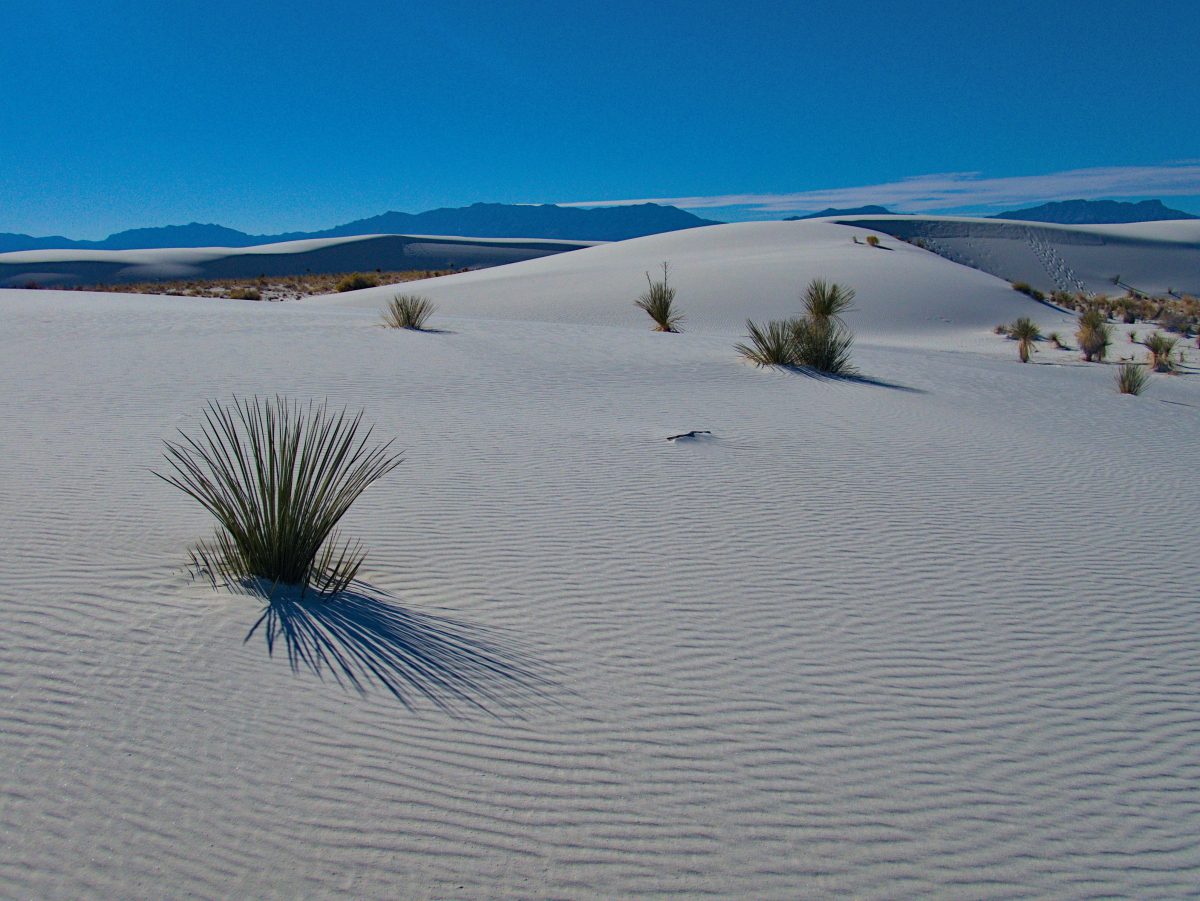
With the help of the sun to the south (being just two weeks out from winter solstice) and the mountains bounding in the dunes to the east and west we stayed oriented as we walked the dunes. I could see how if you wandered out here far from the entrance road and parking areas you could get a little lost.
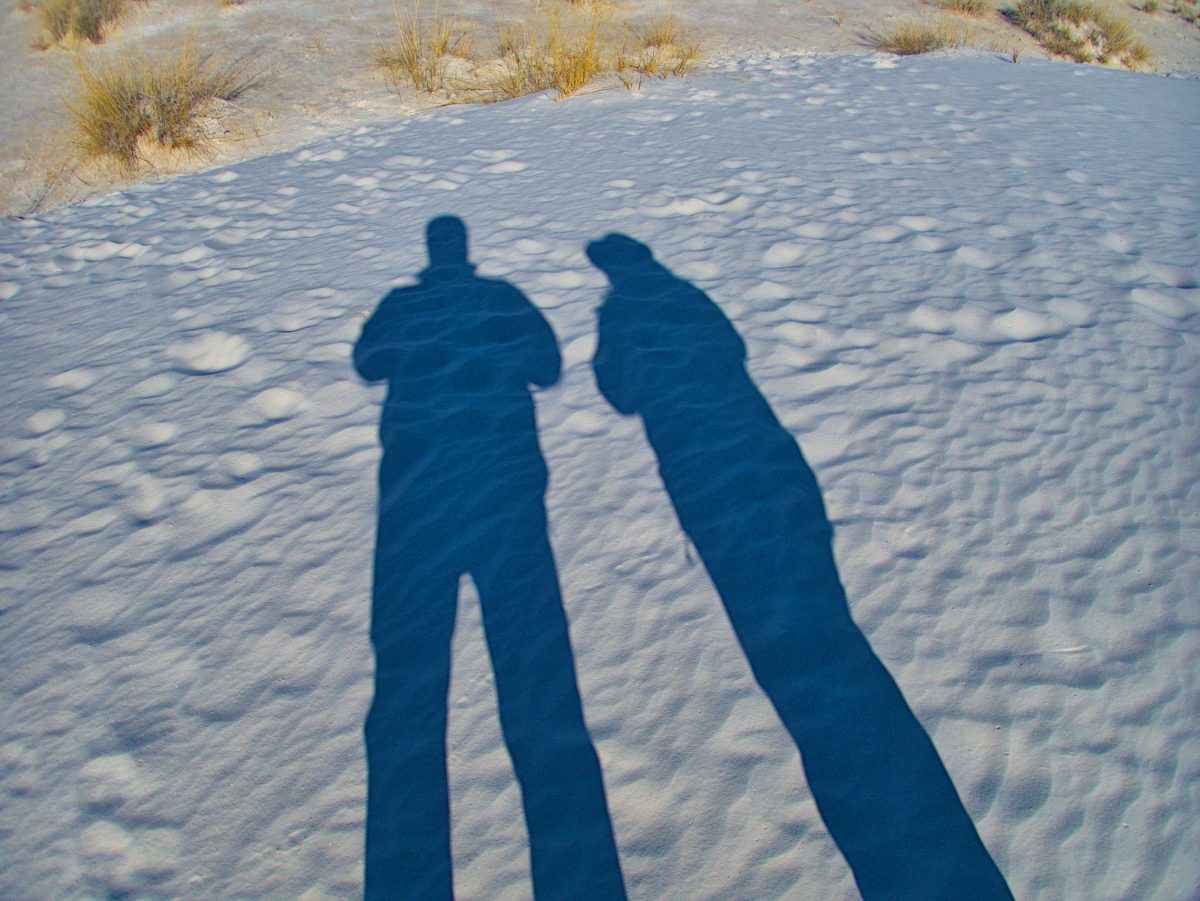
Did we come over this dune, or that one?
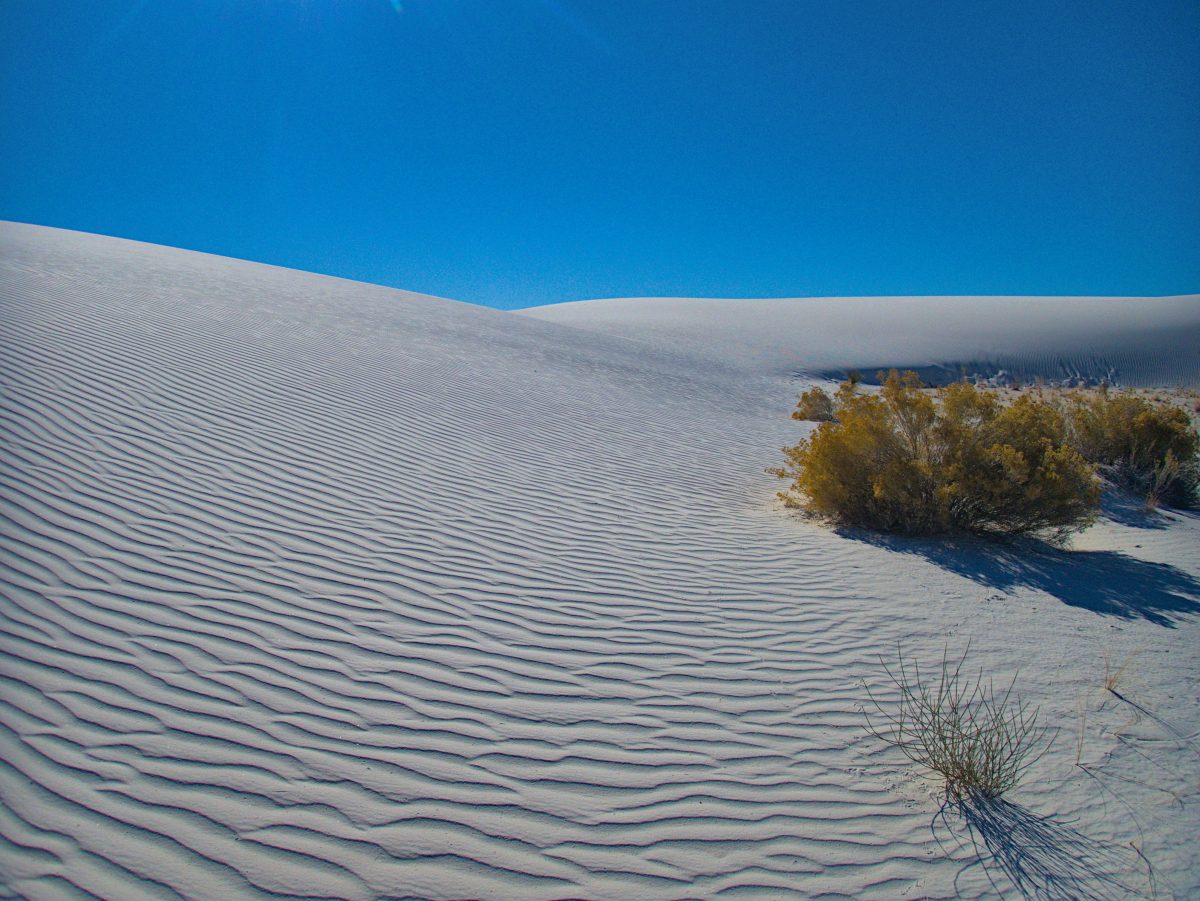
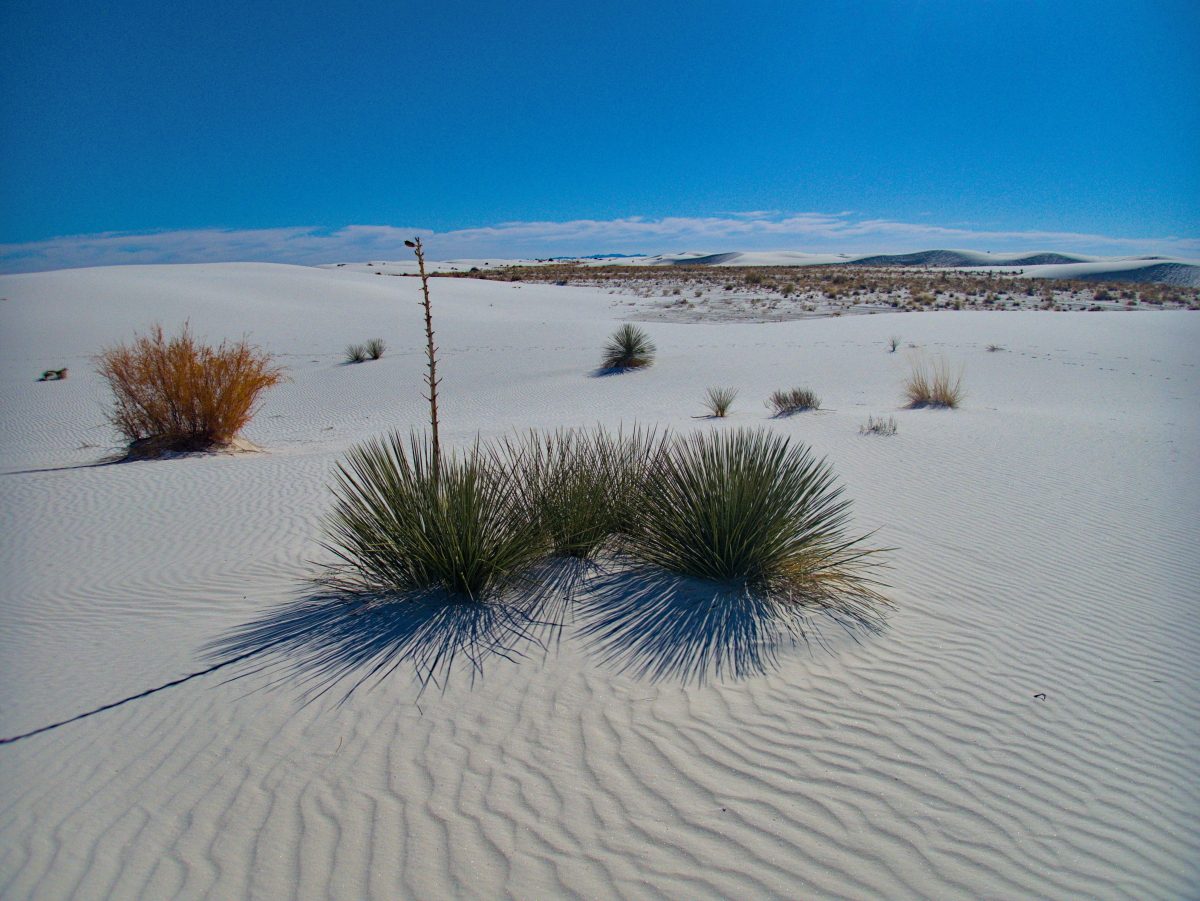
They seem to roll on for miles.
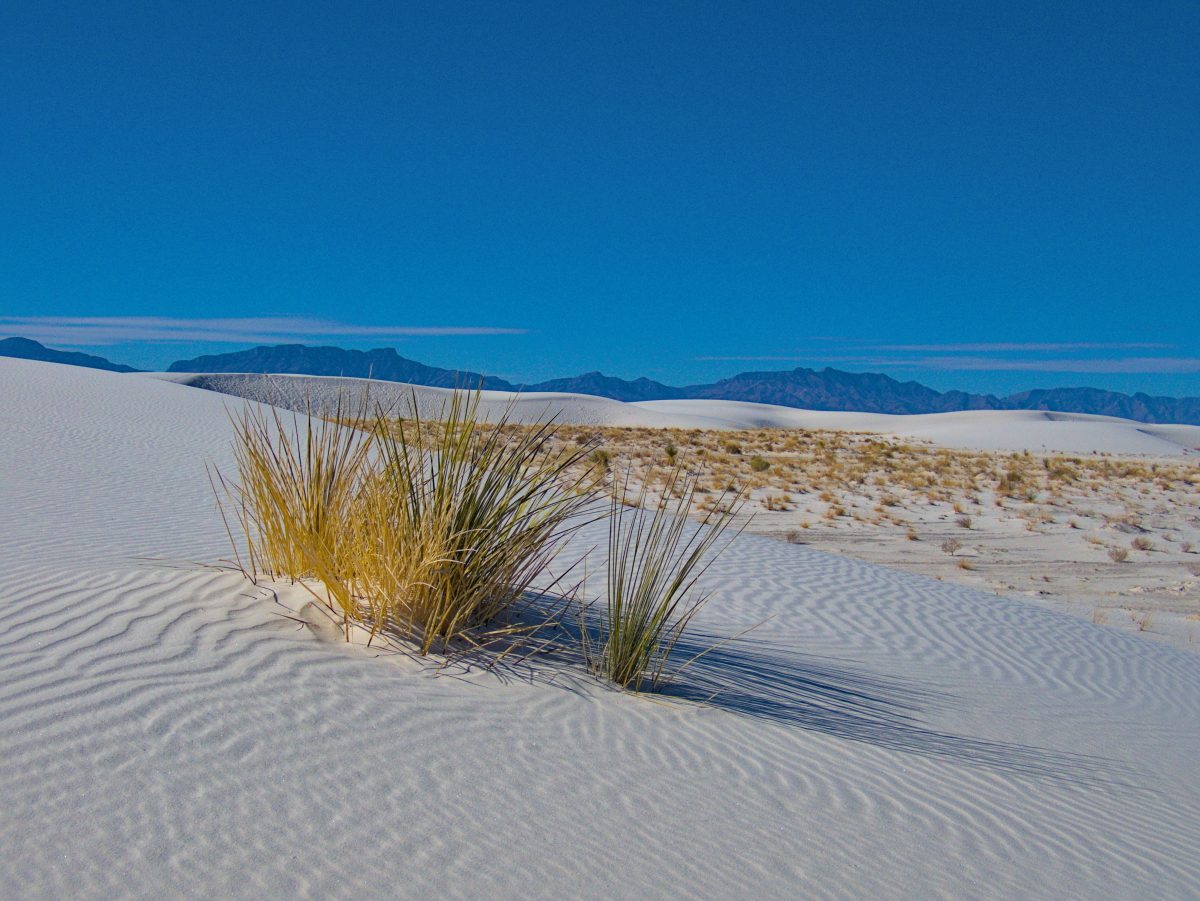
And then, we were back at the truck, with the shadows getting long in the afternoon it was time to go find camp for the night.
Pingback: White Sands Missile Range – Occidentalist
Pingback: Organ Mountains Desert Springs National Monument – Occidentalist